I've been hinting at this entry several times recently, but have always found a reason to post about something else. Today they finally make it to the blog, and if I'm honest today's shots are an improvement on previous efforts. Plus I took shots of almost nothing else. It was overcast this morning and the swallows and martins weren't on their sunny perch. By lunchtime a dull day had transformed into a summer blazer. Hot, muggy, still. Perfect for sitting by the pond and seeing what would appear.
The broad-bodied chasers from earlier in the year have largely moved away. The emperors are still around, but in small number. Right now the dominant species of dragonfly is the common darter. They're still emerging, and are actively breeding.
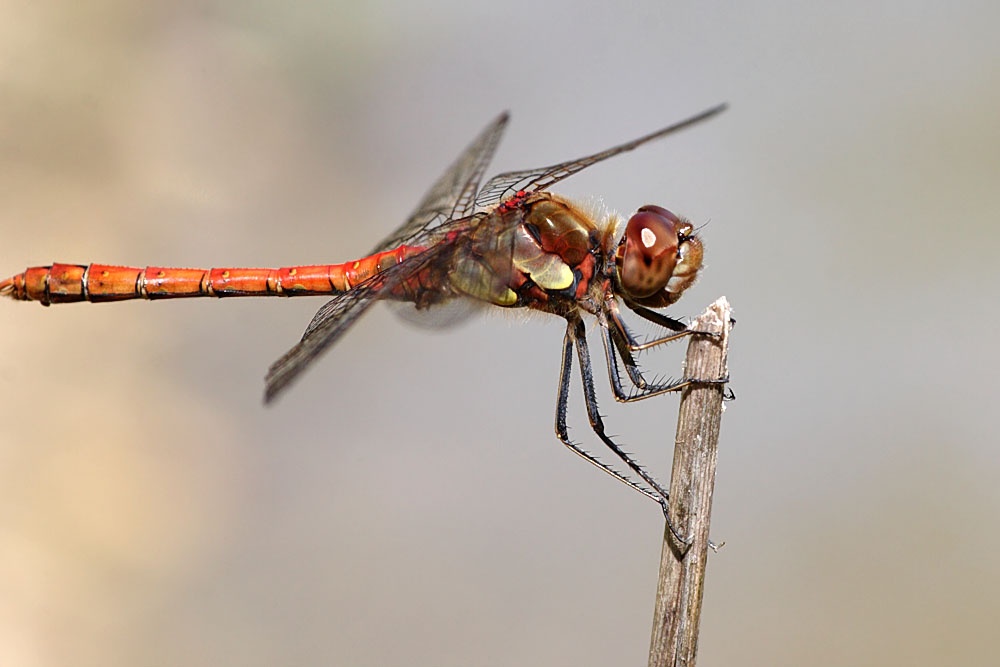
I'll start with a 'standard' shot of a darter perched alongside the edge of the pond. They tend to keep returning to the same spot, so once you've worked out where they like to rest it's simply a matter of waiting until one settles.
In between resting, they were busy mating. These were slightly trickier to get. I was still using manual focusing but instead of adjusting the focus I just rocked back and forth until they were nice and sharp in the viewfinder. It's not a technique that has a hugely high hit rate (my recycle bin is full to bursting), but it is a lot more successful than trying to autofocus a small moving object through the plants
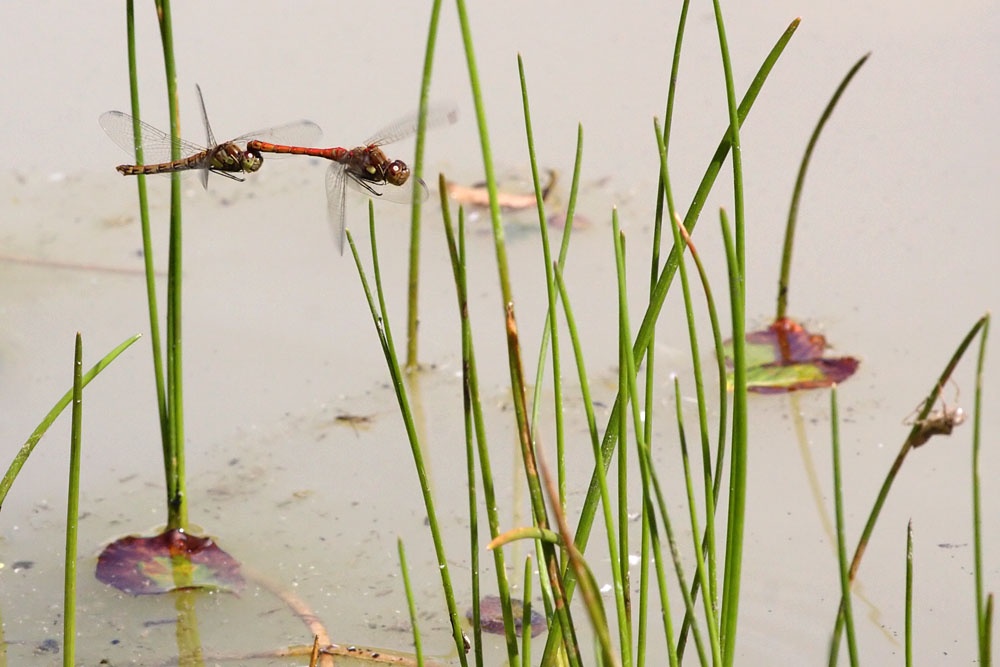
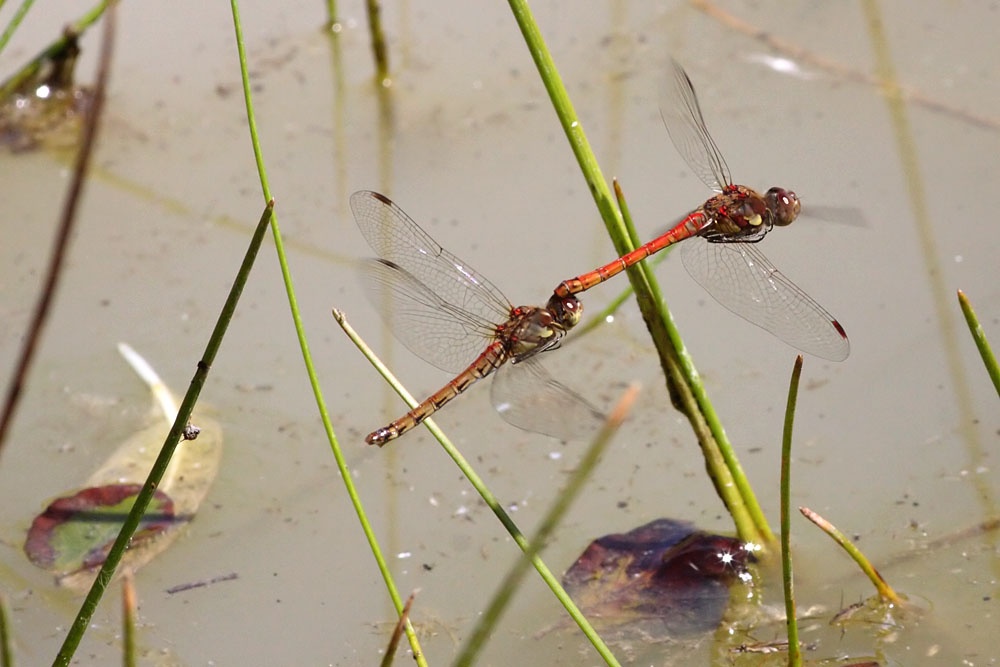
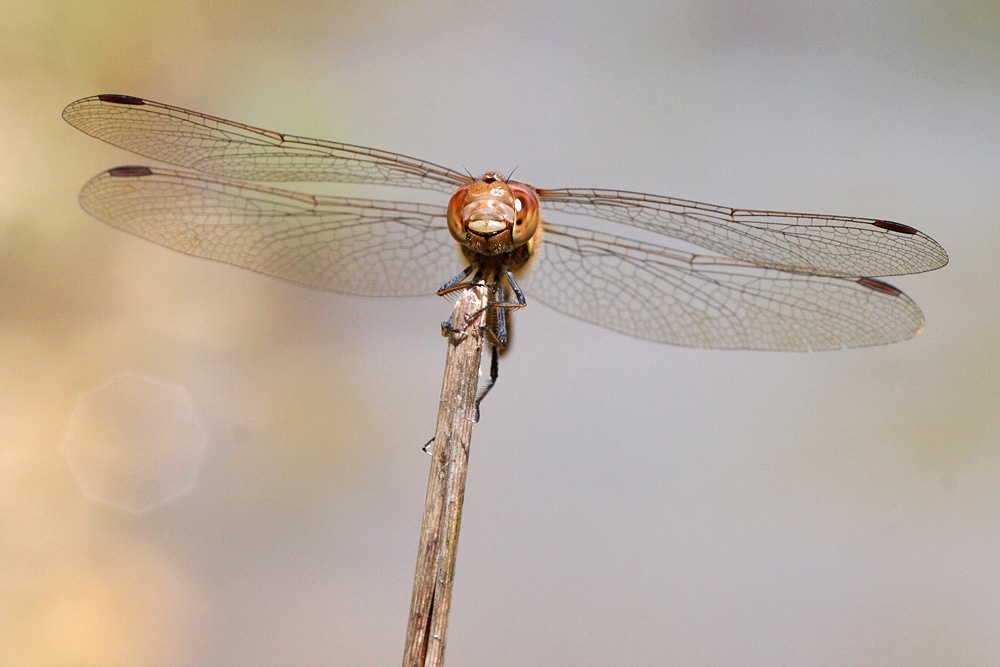
I hardly need say that I have rather a lot of shots very similar to the ones above. Most of them are variations of the perched image. There was one brief sequence though when instead of landing parallel to the camera, a darter flew directly in from behind the stick and stared down the lens, looking for all the world like a motorcyclist, complete with crash helmet. You can also see one of the easier identification features in these shots: the yellow stripe on the outside of the dragonfly's legs
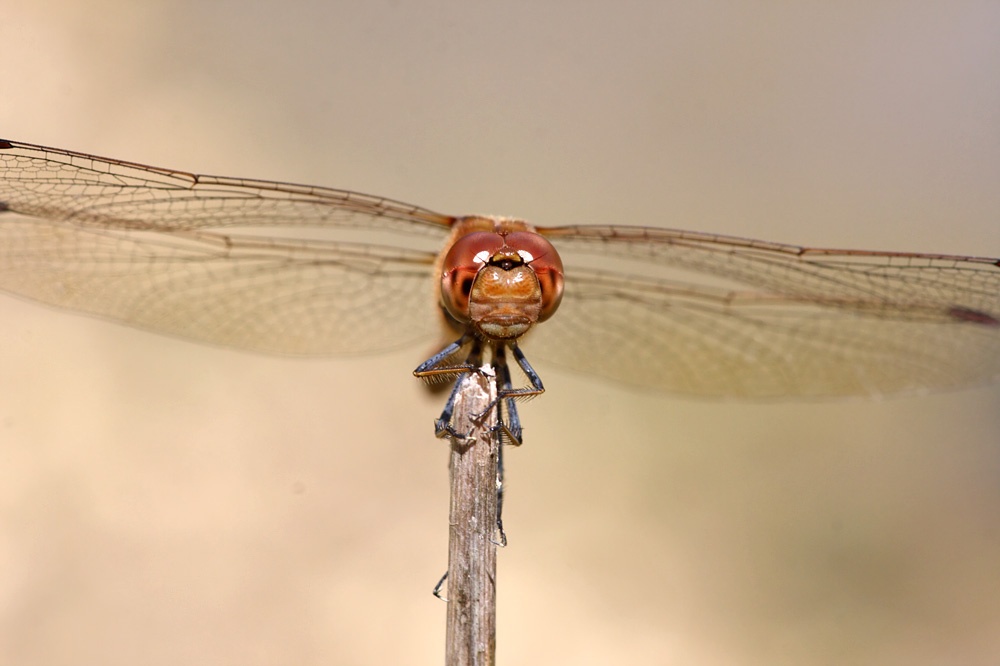
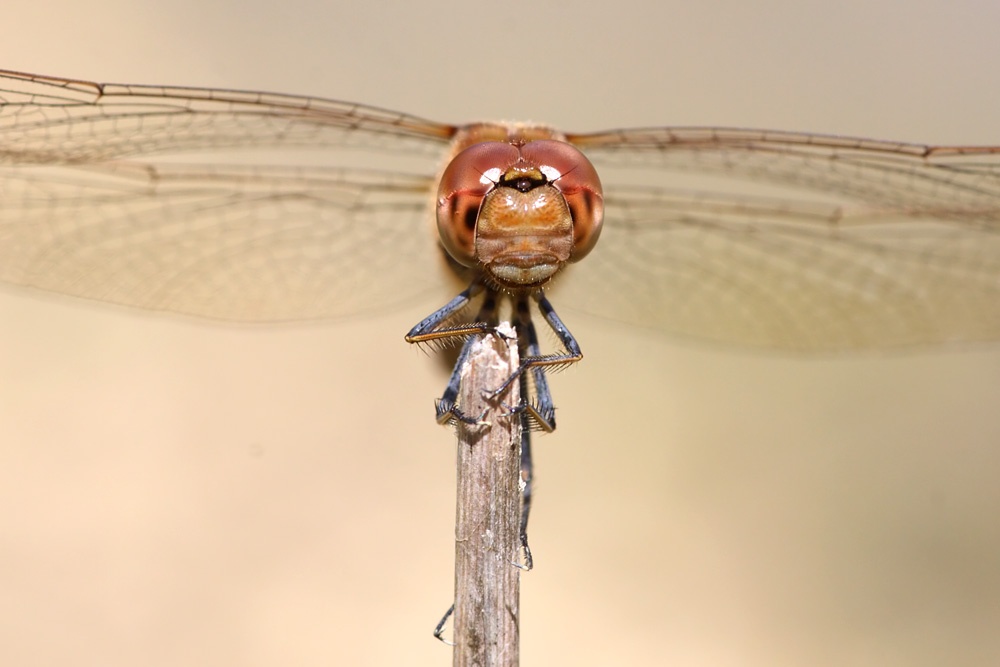
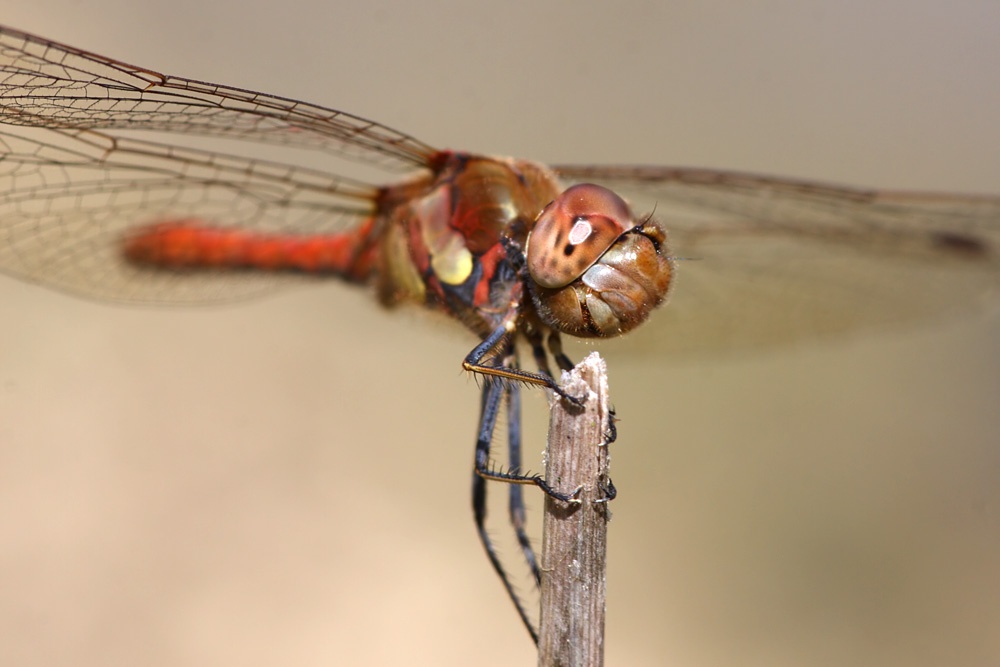
Camera note: all shots were manually focused using the Sigma 105mm F2.8 EX DG macro lens with the Kenko Teleplus 1.4x Pro 300 DG teleconverter attached (which gave me a little more working distance).
gdare
6 Aug 2009Nice photos :up: I can just imagine how hard that is to focus manually on a moving objects :faint:
Words
6 Aug 2009Thanks Robin, it's not that difficult, but it is time consuming 😉
RobinL
6 Aug 2009Amazing shots. You make it look so easy!
Words
6 Aug 2009Darko, thanks. It cn be frustrating when they are moving about. The darters tend to move quite slowly (unlike the emperor dragonflies which I find nearly impossible to get in flight). They key is patience. If you try to chase them it never works. Find a spot where they will come, focus on that and then wait.
Flying Red Fox Blog
6 Aug 2009Very cool shots :yes: the one before the last photo looks as if hes sticking his tongue at you face lol 😆
Ukwildlife
6 Aug 2009That last photo is excellent – great DOF,compostion adn angle on the body.
You should pop up to Thursley Common if you get a chance if you like the dragons 🙂
Words
6 Aug 2009Mark, thanks! They have great faces don't they. :alien:
Words
6 Aug 2009Neil, thanks. I really should get out and about a bit further. It's the better part of two hours from here, but I may make the effort if we get a nice day.
Words
6 Aug 2009Thanks Walter!
bugscout
6 Aug 2009unbelievable – breathtaking photos
anonymous
5 Aug 2010samamntha lee writes:
hi ive found a dragon fly it has orange tinted wings and a black body with brite yellow stripes on its body can u tell me what sort it is ir quite big!!
Words
5 Aug 2010Difficult to say but it sounds like it could be a four-spotted chaser (assuming you are in the UK).